revitalizing the Penobscot language
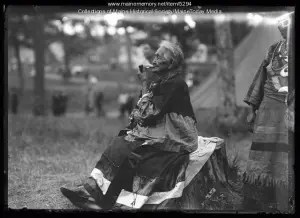
Clara Neptune, Penobscot, sitting at Indian Village in Deering Oaks Park, Portland, Maine, during the Maine Centennial, June 28, 1920.
Our first language is often called our ‘mother tongue,’ critical to our cognitive development, cultural connection, and emotional well-being. Penobscot elder Clara Neptune embodies the essence of ‘mother tongue” and the poised and profound strength of many generations of Penobscot matriarchs.
Photo Source: Portland Evening Express (June 29, 1920) Maine Historical Society, Maine Today Media (Item 5294).
Welcome!
I’m Jerry Pardilla, a Penobscot linguist. Join me on a journey to experience language learning, cultural sharing, and perspectives about contemporary Penobscot issues.»

PENOBSCOT NATION website
Visit the official website of the Penobscot Nation for current information, and links to the Penobscot Culture & Historic Preservation department. »

PENOBSCOT LANGUAGE STATUS
In 1891, linguist J. Dyneley Prince noted that there were about 350 Penobscot language speakers at Indian Island, Maine. »
In 1993, the last known first language speaking Penobscot, the late Madeline Tomer Shay passed away.»
Today, the Penobscot language is assessed at level 9 on the EGIDS scale, and classified as dormant. »
WHY RECLAIM OUR LANGUAGE?
Reclaiming our language is critical to understanding the worldview, values, and traditions of our ancestors. Traditional knowledge provides moral lessons and time-honored cultural practices to guide our society to live responsible in our homelands and respectfully with others. »
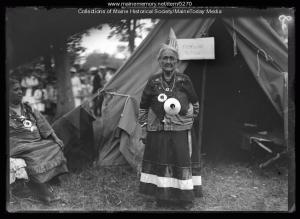
Expand Your Knowledge with Resources
Penobscot Language Resources
— Penobscot Nation Culture & Heritage Preservation Department provides language resources.
Indigenous language revitalization
— In the past three decades a new field of Indigenous language revitalization has emerged. There are a number of Indigenous led organizations that are noteworthy. Checkout the following–not an exhaustive list:
Teaching Indigenous language resources
— Certain universities have focused on teaching Indigenous languages. Checkout the following — not an exhaustive list:
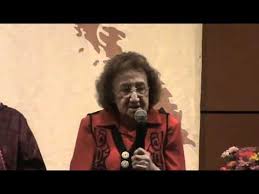
The late Tlingit elder Elaine Abraham (1929-2016) shared insightful words about Indigenous languages: “If you don’t know the language, you’ll only see the surface of the culture. The true understanding of culture is expressed in the language. The language is the heart of the culture and you cannot separate it. If we have not learned the language, we need to find a teacher.”
Photo credit: AlaskaIPL YouTube channel
Latest Posts
-
That may seem like an absurd question, but a linguist and his heirs actually claim ownership of the Penobscot language.… Read more
-
For a graduate course at the University of Maine, I have conceptualized a professional development workshop that would be proposed… Read more
-
Today, I changed the design of my blog site. The changes in theme, presentation of information, and blog posts are… Read more